Metal Roof Coating Services in Bellevue
Which Coating System Fits the Roof on Your Building?
Our metal roof coating services in Bellevue cover five systems for commercial roofs, each matched to slope, drainage, and the surface already on the roof.
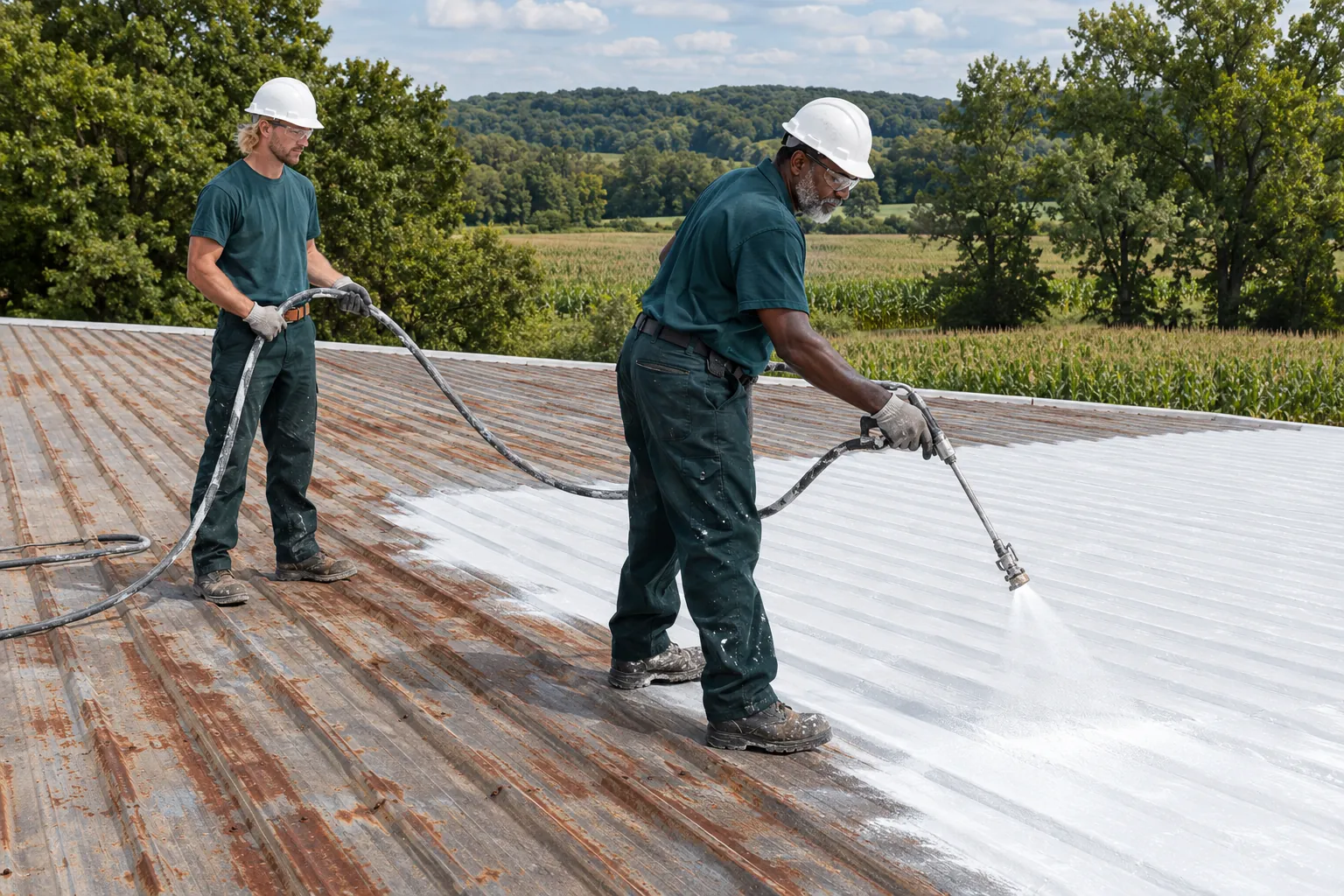
Five Metal Roof Coating Services in Bellevue
Each of our metal roof coating services in Bellevue starts with the same inspection. The line under each card shows where that system works best.
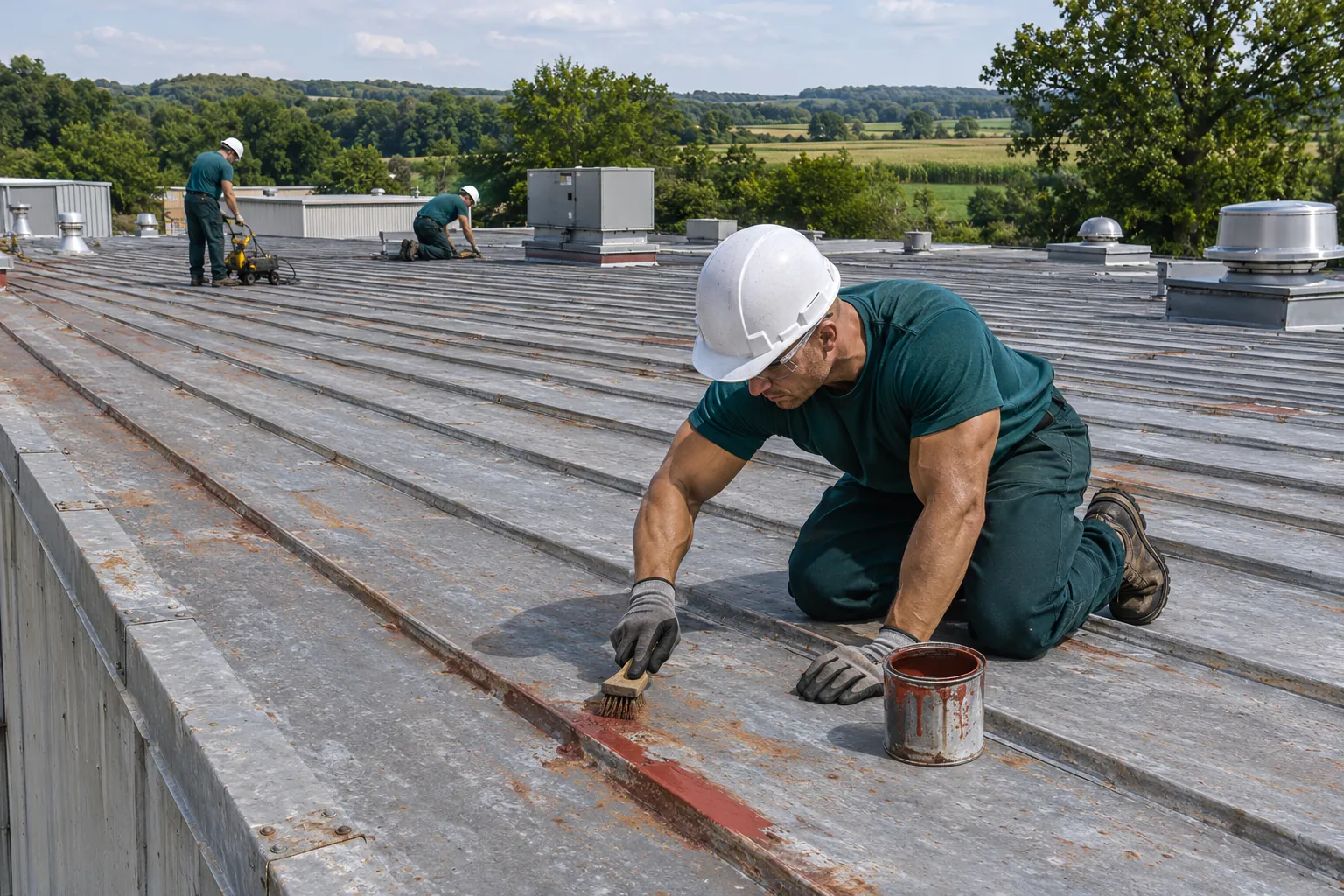
Commercial Metal Roof Coating
Our main service for exposed-fastener and ribbed panel roofs. Screws are replaced where they fail, rust is primed, laps are reinforced, and the whole roof gets one coating system.
Best on firm panels leaking at screws and laps
Commercial Metal Roof Coating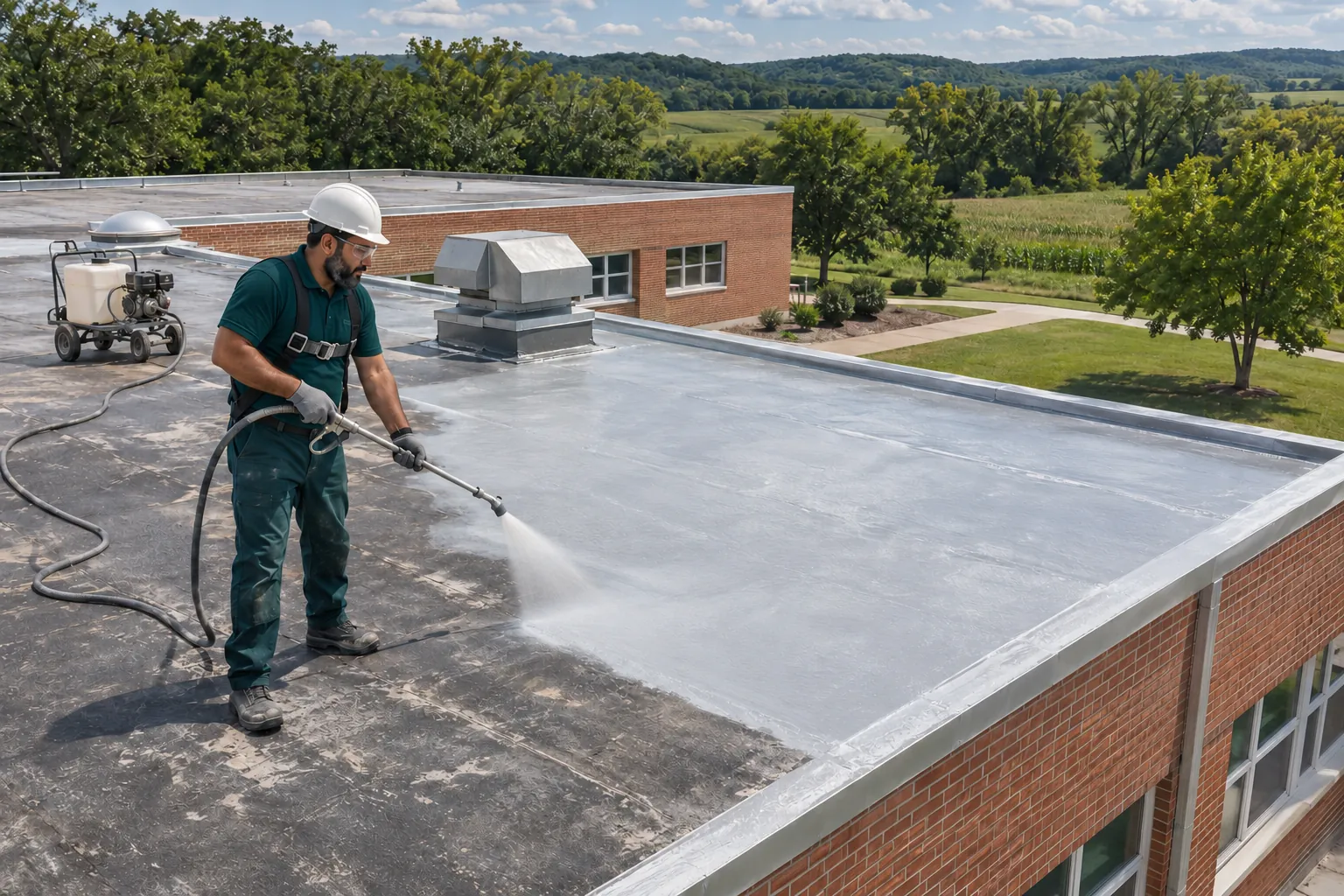
Silicone Roof Coating
Thick, high-solids silicone for low-slope metal, single-ply, and built-up roofs. It tolerates standing water and goes on in fewer passes than water-based coatings.
Fits roofs where water sits after rain
Silicone Roof Coating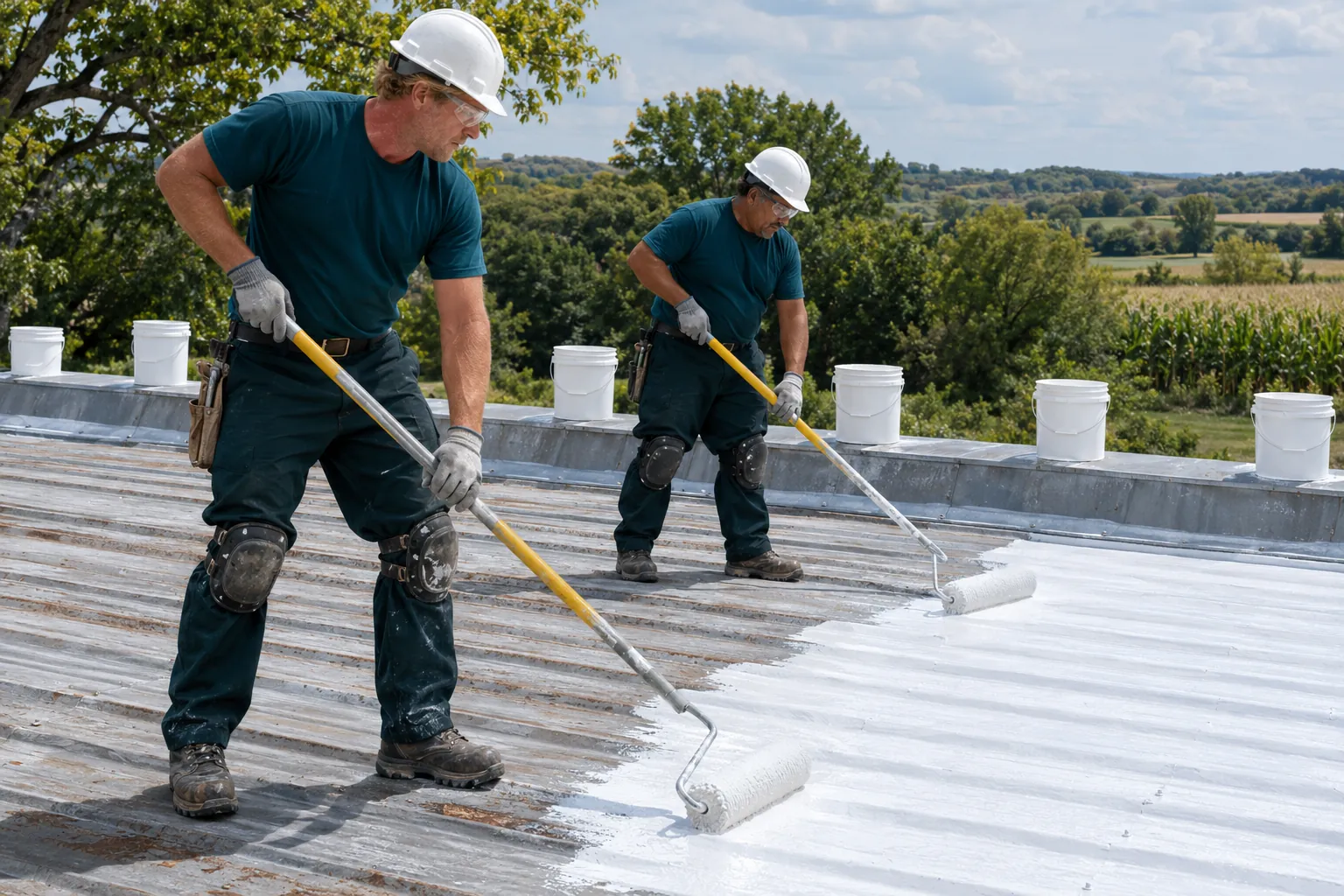
Acrylic Roof Coating
Water-based white acrylic built up in two or more coats over primed steel. It needs dry, mild weather and recoats easily with more acrylic.
Fits sloped metal that drains fast
Acrylic Roof Coating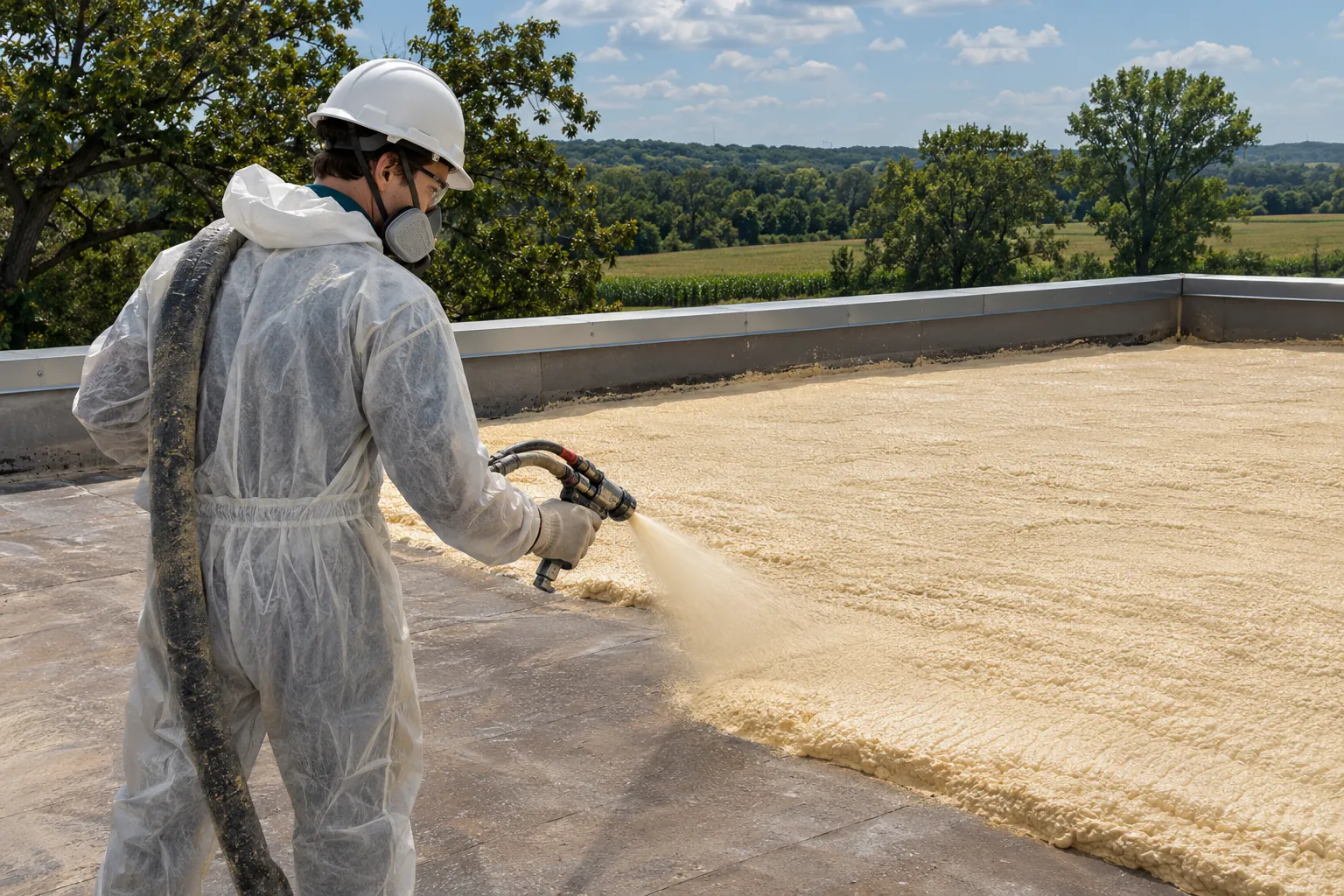
Spray Foam Roofing
Foam sprayed over a dry existing roof forms one continuous layer, adds insulation, and can be shaped to move water toward drains before its topcoat goes on.
Fits flat roofs that need insulation
Spray Foam Roofing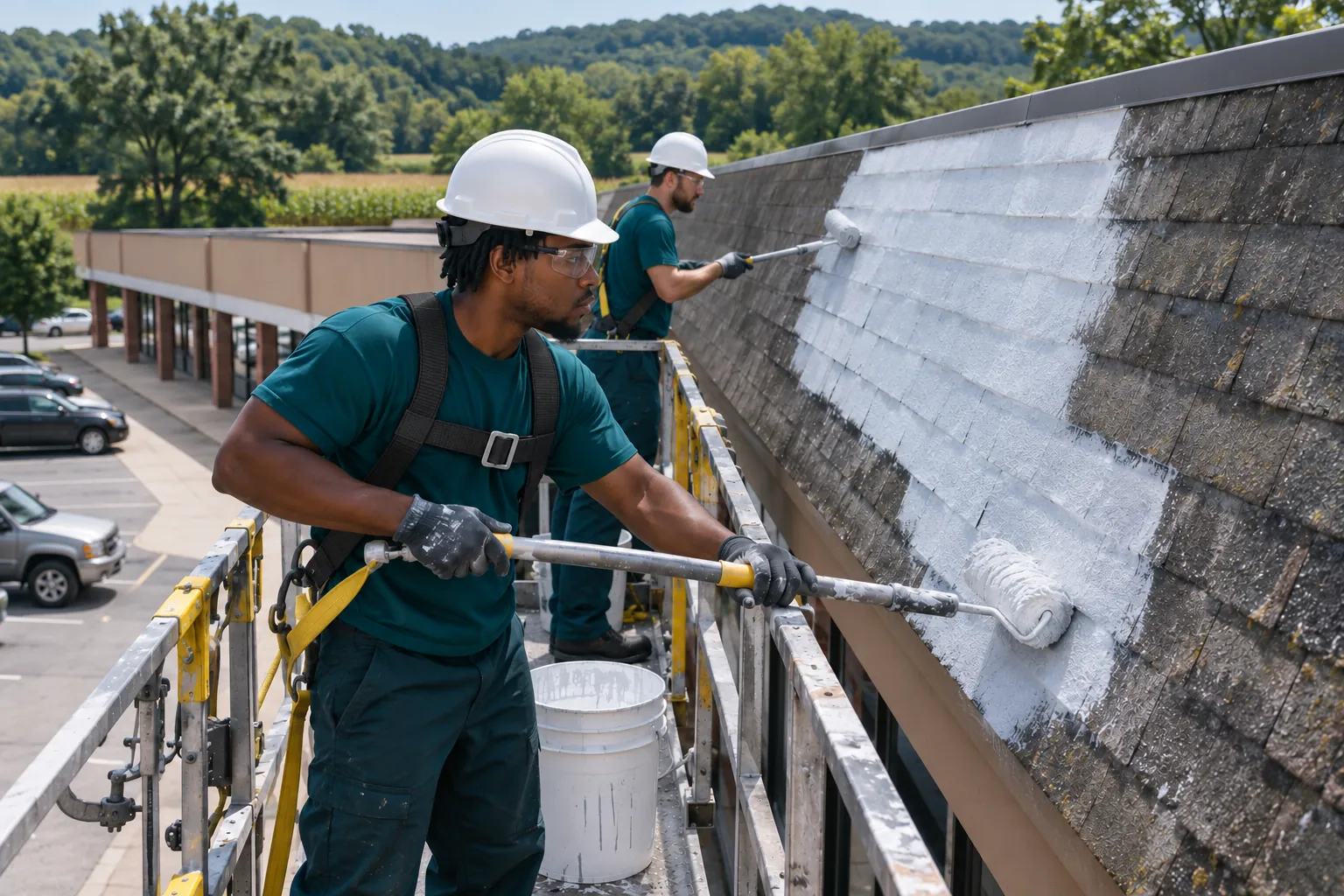
Shingle Roof Coating
Coatings rated for asphalt shingles on commercial mansards, church roofs, and sloped entries, used only when the shingles still lie flat and hold their nails.
Fits aging shingles that are still flat
Shingle Roof Coating
Which System Fits Which Roof
Five systems, five sets of strengths. Slope and drainage narrow the choice long before price does, so start by reading across the first two rows.
Metal Roof Coating
Silicone
Acrylic
Spray Foam
Shingle Coating
Not Sure Which System You Need?
An inspection of the roof answers that question. Bring these details to the visit.
- Roof type and slope
- Where water stands
- Past coatings on the roof
- Roof size and access
One Process Behind Every Coating System
The steps stay the same across all five systems; only the materials change.
Inspect Your Roof
We identify the roof type, measure slope, map where water stands, and take moisture readings, since those four facts point to one system over the others.
- Roof type and slope
- Ponding map
- Moisture readings
Repair What the Coating Will Cover
Failed screws, open seams, wet insulation, and loose flashing get fixed so the chosen system goes over a dry, tight roof.
- Screws and seams
- Wet areas replaced
- Flashing at curbs
Prepare the Surface for Its System
Each system has its own primer and cleaning steps. Metal gets rust primer, asphalt gets a bleed-blocking primer, and shingles get a low-pressure wash.
- Cleaning matched to the surface
- Primer matched to the system
- Adhesion checks
Apply and Check Thickness
Every system goes on at the thickness its maker specifies, checked in dry mils or foam depth, and the finished roof gets a final walk with you.
- Thickness checks
- Section-by-section work
- Final walk
Choosing Between Our Coating Services
Answers that help narrow the choice of system before we walk your roof.
Which metal roof coating service fits my building?
Start with slope and drainage. Pitched metal that drains fast points to commercial metal roof coating with acrylic or silicone. Flat roofs where water stands point to silicone, or to spray foam if the building also needs insulation. Steep shingle sections take a shingle-rated coating, and the inspection confirms the pick.
Can one building use two coating systems?
Often it does. A flex building might have a pitched metal main roof, a flat roof over the office, and a shingle mansard on the front. We coat each section with the system that fits it and tie the sections together where they meet.
Do all five systems cost about the same?
Coating systems fall in a planning range of about $2.50 to $4.00 per square foot. Silicone costs more per gallon but takes fewer coats, acrylic costs less but takes more, and foam adds material for insulation. Repairs and access often move the price more than the system choice does.
Which system handles hail best?
Thicker films, and foam with granules broadcast into the topcoat, take hail better than thin coats. Any coated roof should be checked after a large hail storm, and small punctures get patched with matching material before water reaches the steel or foam.
How long does a coated roof go before it needs attention?
Plan on periodic inspections, with cleaning and touch-ups as needed, and a recoat once the film wears thin. How soon that comes depends on film thickness, standing water, hail, and foot traffic. Keeping drains clear and fixing small damage early stretches the time between recoats on any system.
Do coating services include repairs?
Yes. Every estimate lists the repairs a roof needs before coating, such as fastener replacement, seam reinforcement, wet insulation removal, and flashing at curbs. Those repairs are priced on their own lines, so you can see what the coating covers and what the repair stage covers.
Can coating go over a roof that already has a coating?
That comes down to testing. We check whether the old coating is still bonded, what material it is, and how thick it remains. Silicone takes only silicone over it, while acrylic and many older coatings accept a new coat after cleaning, priming where needed, and an adhesion test.
Why does the inspection come before a price?
A coating price rests on what sits under the coating: wet insulation, failed screws, open seams, or rusted-through panels. Each of those changes the repair list and the material count. Pricing after the inspection keeps the estimate tied to your actual roof.
Book Metal Roof Coating Services in Bellevue
Tell us about your roof, and we will inspect it and recommend the system that fits its slope, drainage, and surface.