
Bellevue Silicone Roof Coating Contractor
Silicone That Protects Low-Slope Roofs Where Water Sits After Rain
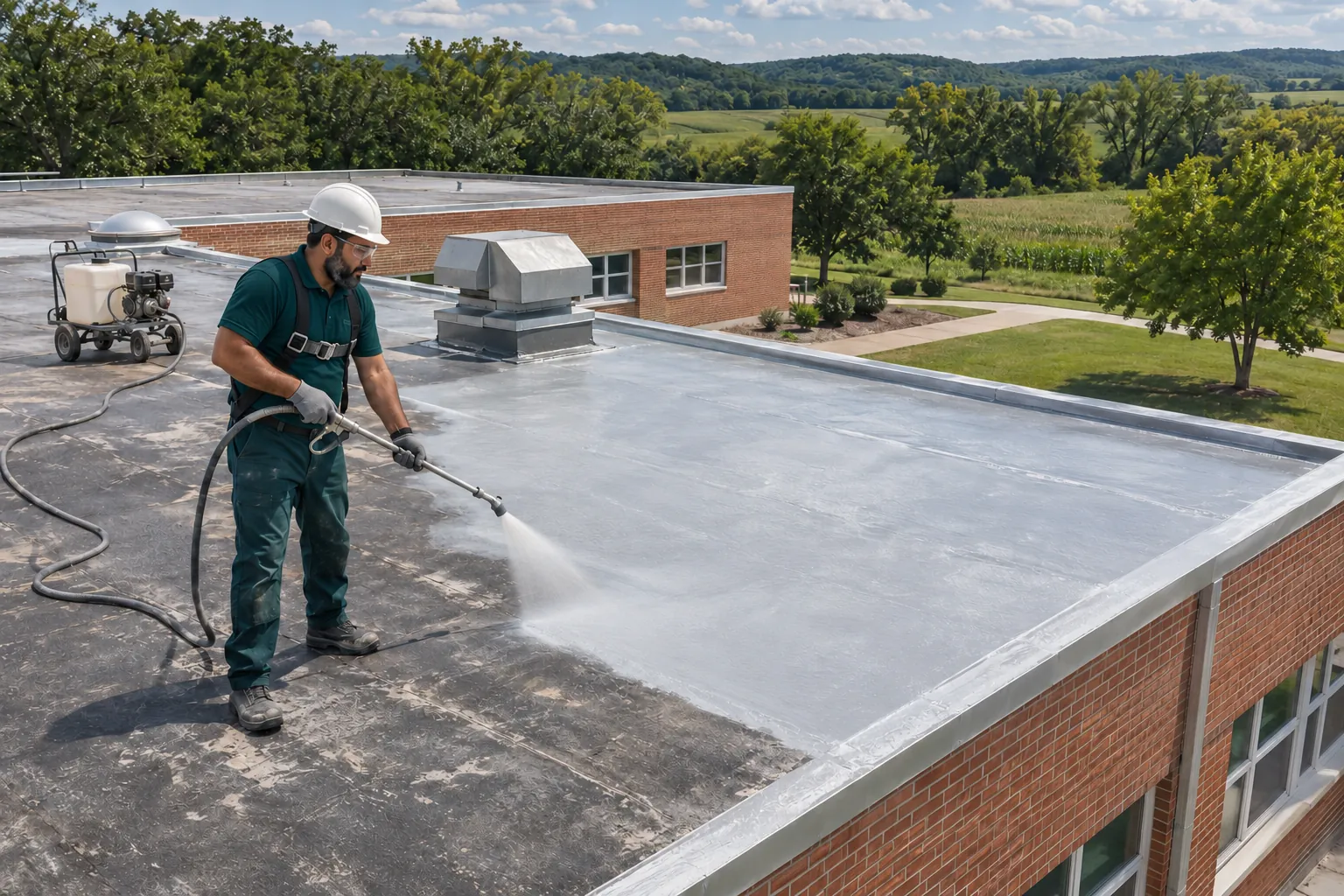
As a Bellevue silicone roof coating contractor, we coat low-slope metal, membrane, and built-up roofs on schools, churches, and warehouses that hold water after storms.
At A Glance
- Built for Standing Water
- Moisture Readings First
- Often One or Two Coats
- Recoats Use Silicone
Is a Bellevue Roof a Fit for Silicone Roof Coating?
Bellevue silicone roof coating fits best on low, slow-draining roofs with dry insulation. These rows show where silicone wins and where another system makes more sense.
Silicone Fits
Silicone After Repairs
Acrylic Instead
Roof Conditions Silicone Roof Coating Handles in Bellevue
Silicone earns its place on the roofs below, where water stays longer than other coatings like.
- Ponding
Puddles Around Roof Drains
Drains set a little high leave rings of standing water around them. Silicone tolerates that water, while we also clear the drain and check its clamp ring.
- Seams
Open Seams on Single-Ply
Older single-ply membranes split at seams and shrink at edges. Seams get reinforced with fabric and silicone before the field coat goes down.
- Wet Core
Soft Spots Over Wet Insulation
A spongy feel underfoot usually means wet insulation. We cut those spots out and replace them so silicone goes over a dry roof.
- School Roofs
Low Sections on Schools and Churches
Gyms, classroom wings, and fellowship halls often sit under flat roofs that drain slowly. Silicone goes on without a tear-off, so the rooms below stay in use.
Commercial Roof Coating Options for Bellevue
Silicone goes over several roof types. The prep changes with the surface underneath, so here are the four we see in Bellevue.
Silicone Over Low-Pitch Metal
Rust primer and seam detailing come first, then silicone covers screw rows and laps on panels that hold water near the eave.
Fits metal roofs with slow drainage
Silicone Over Single-Ply
TPO or EPDM sheets get cleaned, primed with the product made for that membrane, and reinforced at seams.
Fits aging membranes with dry insulation
Silicone Over Built-Up Roofs
Gravel is cleared or the surface is cleaned, blisters are cut and patched, and a bleed-blocking primer stops asphalt from staining the silicone.
Fits built-up and modified bitumen roofs
Silicone Over Spray Foam
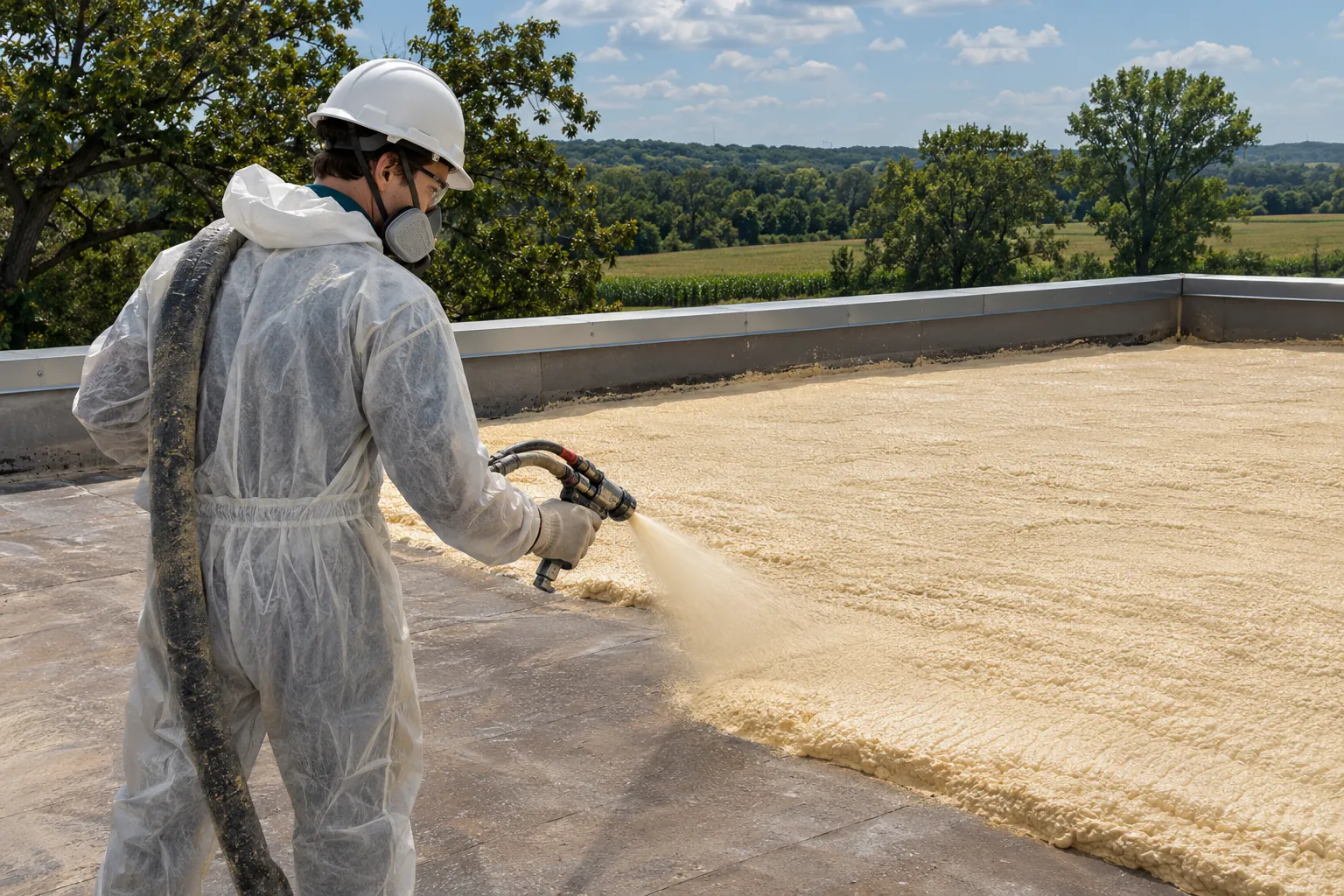
Spray foam roofs often take silicone as the topcoat, and worn silicone topcoats are renewed with more silicone.
Fits foam roofs due for a topcoat
Spray Foam Roofing
Benefits of Coating Your Roof
Silicone answers a different set of problems than acrylic does. These four come up most on low-slope Bellevue roofs.
- Problem
Water That Sits for Days
Flat roofs with low spots keep puddles long after a storm passes.
What Silicone DoesSilicone stays intact under standing water, so low spots stop wearing through the coating first.
- Problem
Sun on a Dark Membrane
Black or gray roofs heat the classrooms, sanctuaries, and offices beneath them.
What Silicone DoesA white silicone surface reflects sunlight and cuts that roof heat gain.
- Problem
Many Coats and Long Cure Times
Water-based coatings need several passes and dry days between them.
What Silicone DoesHigh-solids silicone builds its film in one or two passes, which shortens time on the roof.
- Problem
Future Recoats
Every coating wears thin eventually and needs renewing.
What Silicone DoesA clean silicone roof takes a fresh silicone coat over the old one with no tear-off.
Before a Low-Slope Roof Inspection
These details help us plan moisture checks on a flat roof.
- Where water stands after rain
- Any soft or spongy areas
- Age of the current membrane
- Rooftop units and their curbs
How Bellevue Silicone Roof Coating Gets Applied
Silicone work moves through four stages. The inspection decides how much repair the roof needs before coating.
Inspect Your Roof
Moisture readings across the field show where insulation is wet. We also mark every drain, seam split, and blister, and note where water stands after rain.
- Moisture scan of the field
- Core cuts at suspect spots
- Drain and scupper check
Replace Wet Spots and Fix Seams
Wet insulation is cut out and replaced with dry board. Split seams, blisters, and loose flashing are repaired so the roof under the silicone is dry and tight.
- Dry board where cores were wet
- Seam repairs with fabric
- Drain clamp rings reset
Clean and Prime the Surface
Power washing removes dirt and loose granules. Asphalt roofs get a bleed-blocking primer, and membranes or metal get the primer their surface calls for, confirmed with a pull test.
- Pull test for adhesion
- Bleed-blocking primer on asphalt
- Dry surface before coating
Spray or Roll the Silicone
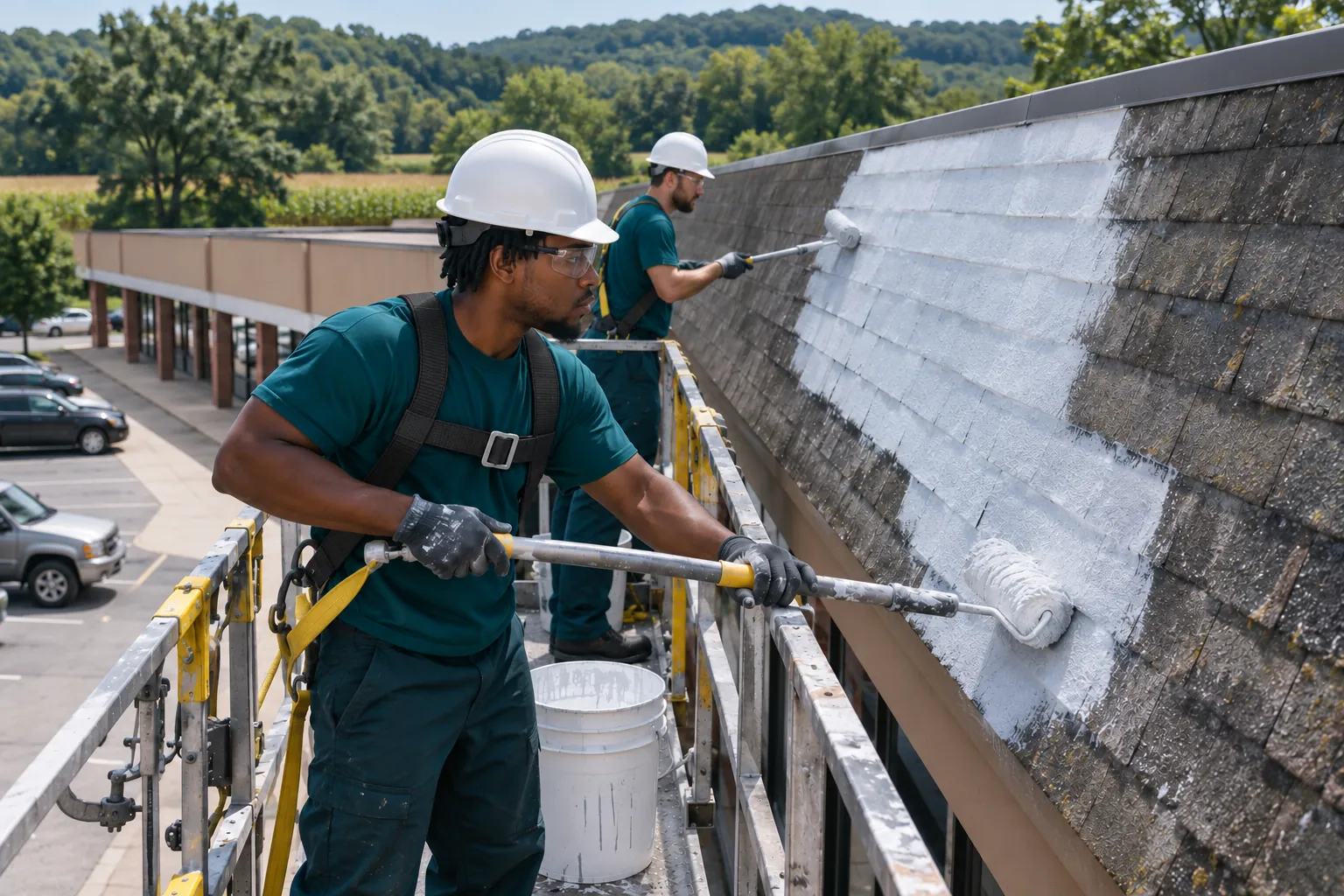
Silicone goes on at the dry mil thickness the maker specifies, often in one or two passes. Ponding areas and drains get extra attention so the film stays full there.
- Thickness checked in mils
- Extra film at ponding areas
- Air intakes covered while spraying
Other Systems Compared With Silicone
Silicone is one of five systems we install around Bellevue.
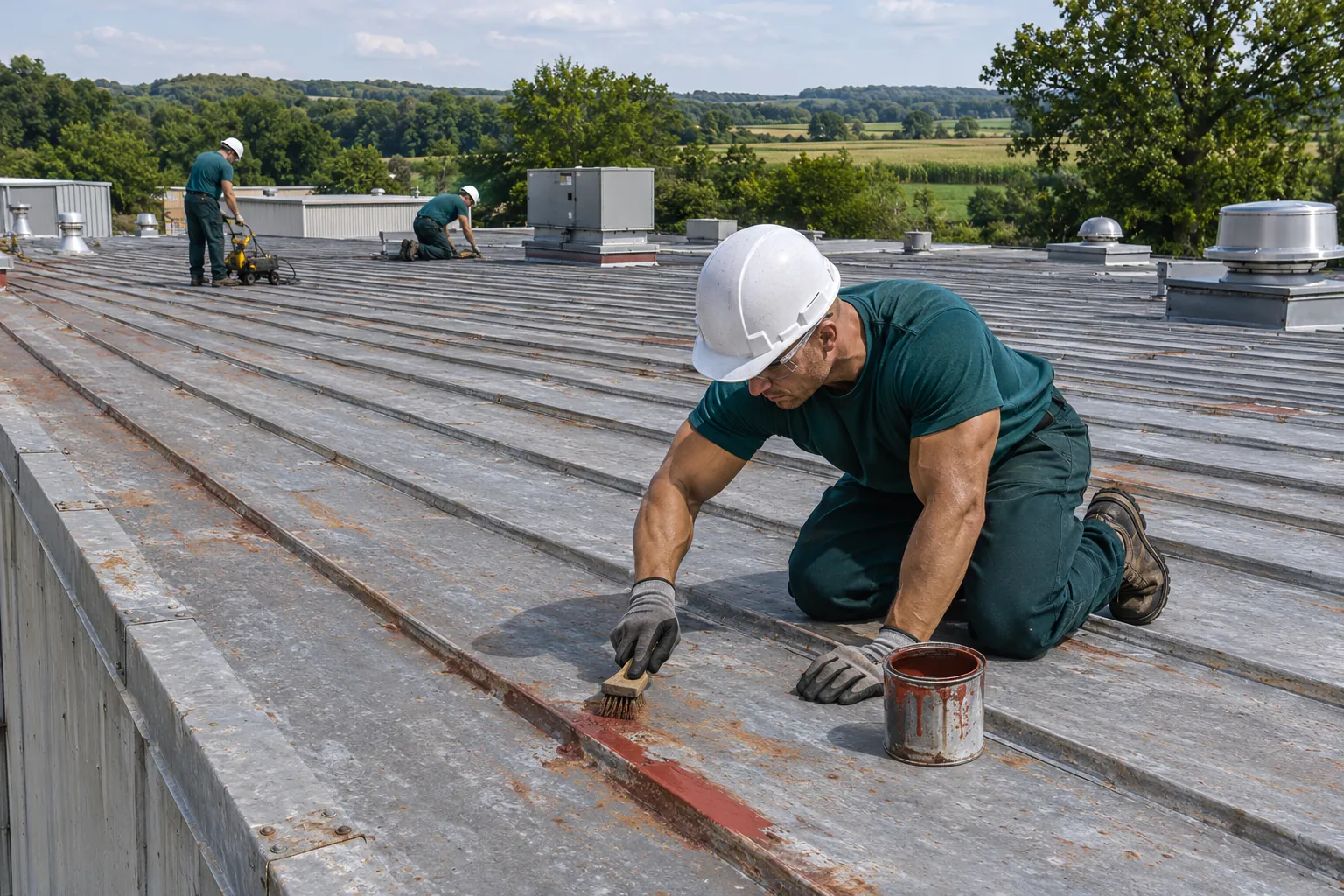
Commercial Metal Roof Coating
Full prep and coating for exposed-fastener panel roofs.
Metal Roof Coating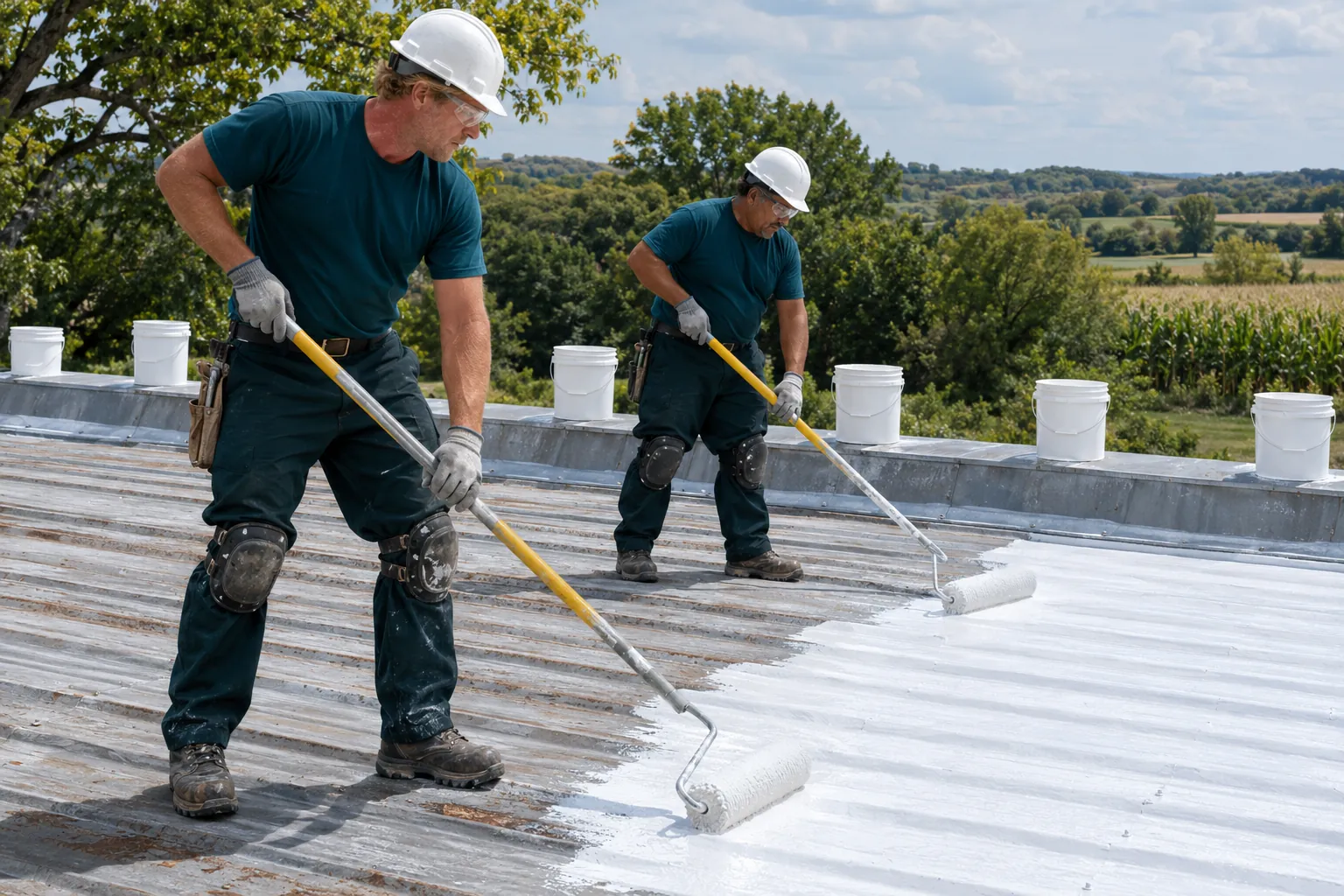
Silicone Roof Coating Questions From Bellevue Owners
What building owners ask before choosing silicone.
How many coats of silicone roof coating does a Bellevue roof take?
One or two, set by the dry mil thickness the manufacturer specifies. Silicone is high-solids, so most of what is applied stays as dry film. A thicker spec covers fewer square feet per gallon, and ribbed metal takes more material than a smooth membrane of the same footprint.
How long does silicone roof coating last on a flat Bellevue roof?
Its life depends on starting thickness, how often it is cleaned, and how soon worn spots get touched up. Silicone weathers slowly in sunlight and holds up under standing water. The surface gathers dirt that washes off, and when the film wears thin, a clean roof takes another silicone coat without removal.
Silicone vs acrylic roof coating: which suits a Bellevue building?
Roof slope settles most cases. Silicone fits low-slope roofs with ponding and usually needs fewer coats, though later recoats must be silicone. Acrylic fits sloped metal that drains quickly, costs less per gallon, and cleans up with water, but it needs dry, mild weather to cure.
What does silicone roof coating cost on a commercial roof?
Plan within the coating range of about $2.50 to $4.00 per square foot. Silicone costs more per gallon than acrylic, while fewer coats can offset that. Roof size, rust and seam repairs, the specified thickness, wet insulation that needs replacing, and access to the roof move the final price.
Can a school or church stay open while silicone goes on?
Yes, since the work stays on the roof and nothing is torn off. We schedule around class calendars and services, and keep lifts, hoses, and material away from entrances, playgrounds, and family parking. Air intakes are covered while silicone is sprayed nearby.
Hire a Bellevue Silicone Roof Coating Contractor
Tell us where water stands on your roof, and we will plan the moisture checks and price the silicone system.