
Bellevue Spray Foam Roofing Contractor
Spray Foam That Adds Insulation and a New Surface Over a Tired Roof
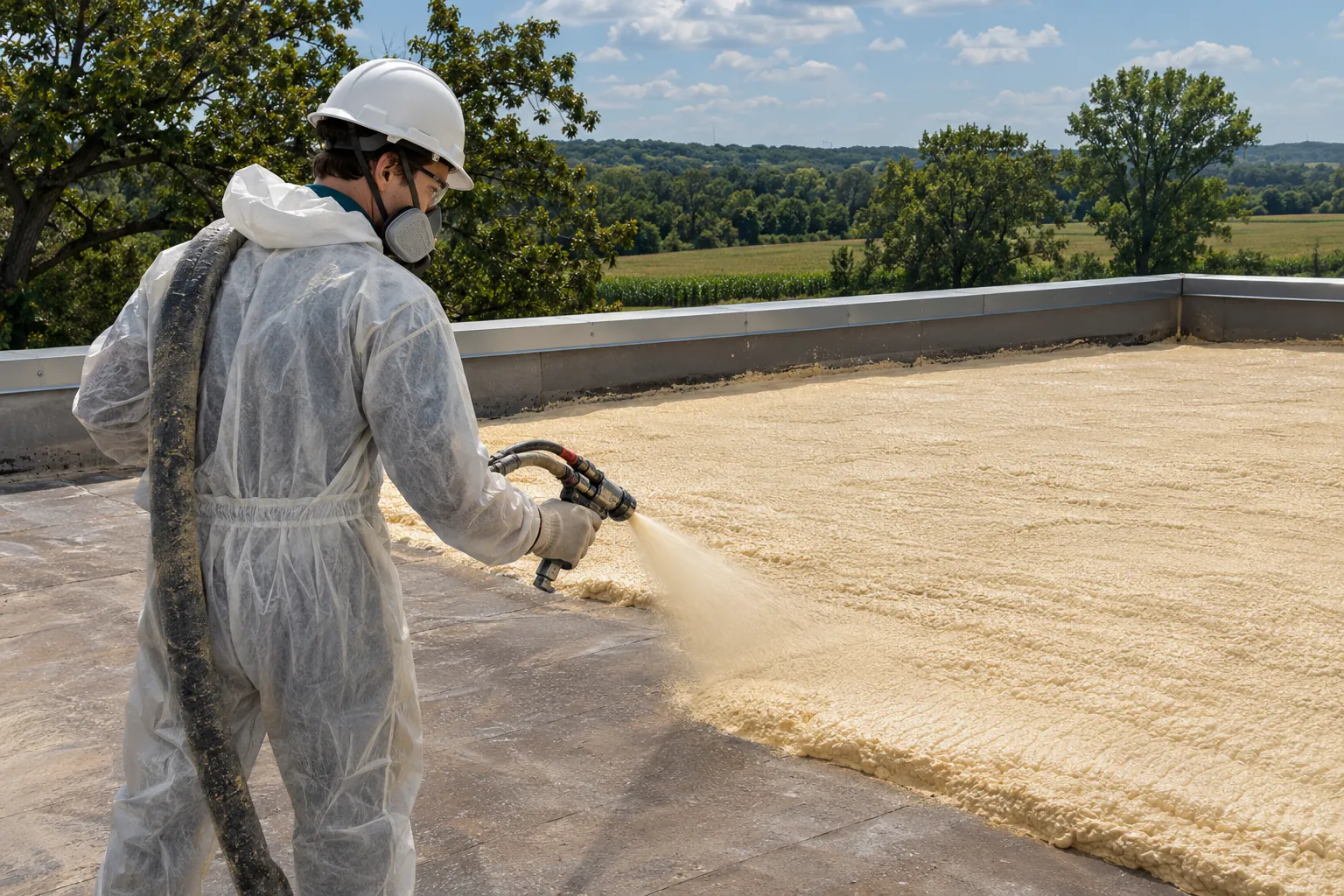
As a Bellevue spray foam roofing contractor, we spray foam over dry flat and metal roofs, build it up where water sits, and seal it with a topcoat.
At A Glance
- Dry Substrate Before Spraying
- Insulation Added With the Roof
- Built Up at Low Spots
- Silicone or Acrylic Topcoat
Is a Bellevue Roof a Fit for Spray Foam Roofing?
Bellevue spray foam roofing needs a dry, well-attached roof underneath. Compare your roof with these three columns before the inspection.
Foam Fits
Foam After Removal
Coating Instead
Roof Conditions Spray Foam Roofing Handles in Bellevue
Foam solves problems coatings alone leave behind, especially low spots and thin insulation.
- Slope
Flat Areas That Hold Water
Foam goes on thicker at low spots and thinner at high ones, which reshapes the surface so water moves toward drains and scuppers.
- Insulation
Thin or Crushed Insulation
Older buildings often have little insulation left above the deck. Each inch of foam adds insulation while it forms the new roof surface.
- Metal
Ribbed Metal With Many Laps
On panel roofs, foam fills between ribs and covers every lap and screw in one continuous layer.
- Penetrations
Crowded Curbs and Pipes
Roofs packed with curbs, pipes, and vents have dozens of flashing joints. Foam wraps up and around each one without separate seams.
Commercial Roof Coating Options for Bellevue
A foam roof is always two parts: the foam and the coating over it. These are the topcoat choices we offer.
Foam With Silicone Topcoat
Silicone over foam handles areas where some water still lingers and renews with more silicone later.
Fits flat roofs with slow drainage
Silicone Roof CoatingFoam With Acrylic Topcoat
Acrylic over foam costs less per gallon and suits foam that is shaped to drain quickly.
Fits foam built with good slope
Acrylic Roof CoatingGranules in the Topcoat
Roofing granules broadcast into the wet topcoat toughen walk paths around rooftop units and help resist hail and bird damage.
Fits roofs with service traffic
Benefits of Coating Your Roof
Foam plus a topcoat answers these four problems on Bellevue flat and metal roofs.
- Problem
Seams Everywhere
Membrane and panel roofs have seams at every sheet edge and lap.
What Foam DoesSprayed foam forms one continuous layer with no seams to open.
- Problem
Heat Lost Through the Roof
Thin insulation lets heat escape in winter and pour in during summer.
What Foam DoesFoam insulates as it goes on, and its thickness is chosen for the building.
- Problem
Standing Water
Flat spots hold puddles that wear any roof faster.
What Foam DoesExtra foam at low spots moves water toward drains.
- Problem
Tear-Off Waste
Removing an old roof creates debris and opens the building to weather.
What Foam DoesFoam goes over a dry existing roof, so less comes off and less goes to the landfill.
Information That Helps a Foam Estimate
Foam jobs depend on what sits under the roof.
- Current roof type and age
- Known wet or soft areas
- Rooftop units and air intakes
- Vehicle and staff parking near the walls
How Bellevue Spray Foam Roofing Is Installed
Foam work follows four stages, and spraying waits for dry, calm days.
Inspect Your Roof
Core cuts and moisture readings tell us whether the existing roof is dry enough to stay. We also map drains, low spots, curbs, and nearby air intakes.
- Core cuts for moisture
- Low spots marked
- Air intakes located
Remove Wet or Loose Material
Wet insulation and loose roofing come out and get replaced, and metal panels get loose screws tightened so the foam bonds to a firm surface.
- Wet areas replaced
- Loose layers removed
- Screws tightened on metal
Clean, Prime, and Mask
The roof is cleaned and dried, primer goes on where the surface needs it, and walls, units, and vehicles nearby are masked or moved to control overspray.
- Overspray masking
- Primer where needed
- Wind checked before spraying
Spray Foam, Then Topcoat
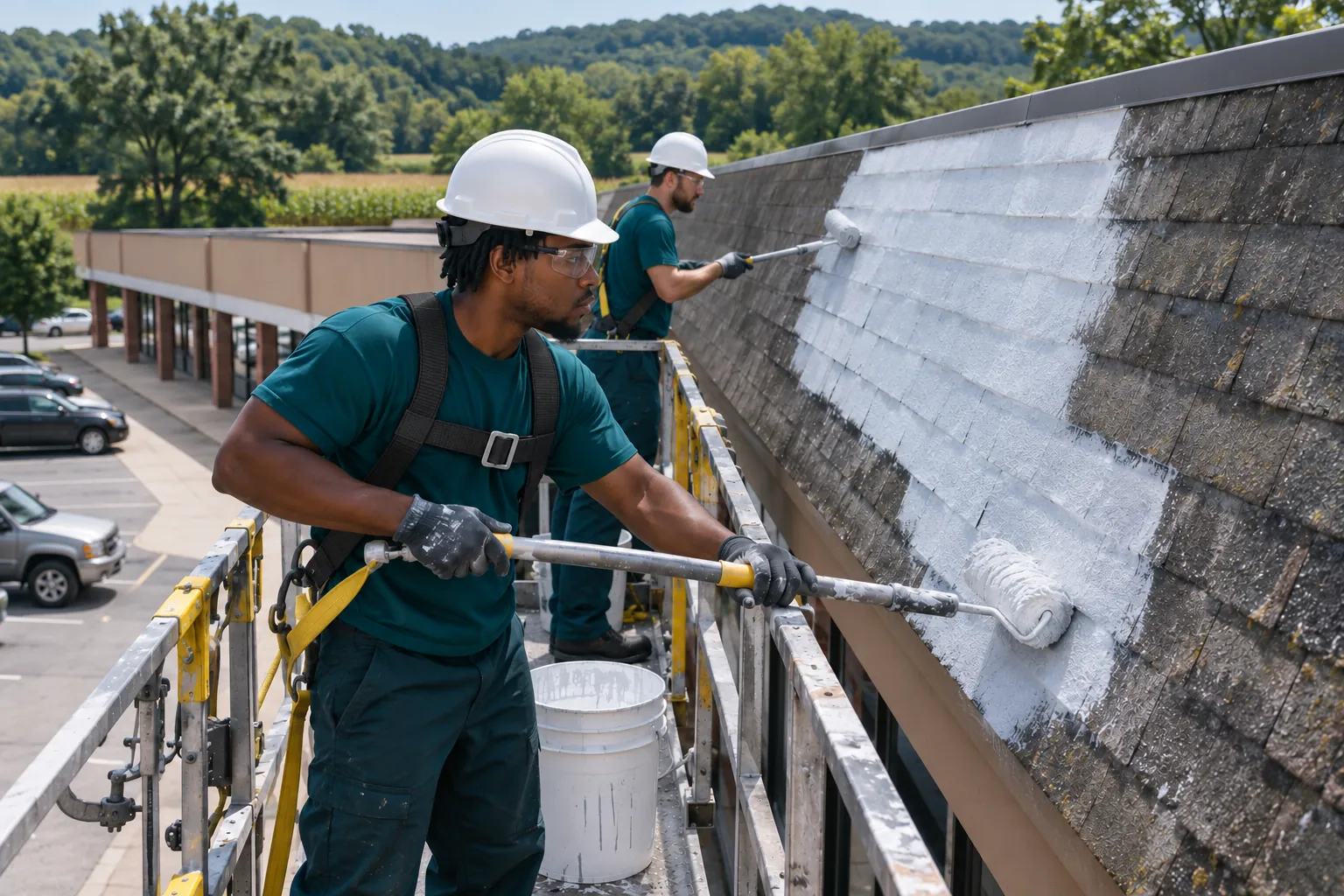
Foam is sprayed in passes to the planned thickness, with extra at low spots. The topcoat follows at its specified thickness to protect the foam from sun.
- Foam thickness probed
- Topcoat in mils
- Granules on walk paths if chosen
Coatings That Pair With Spray Foam
Many buildings mix foam with one of these systems.
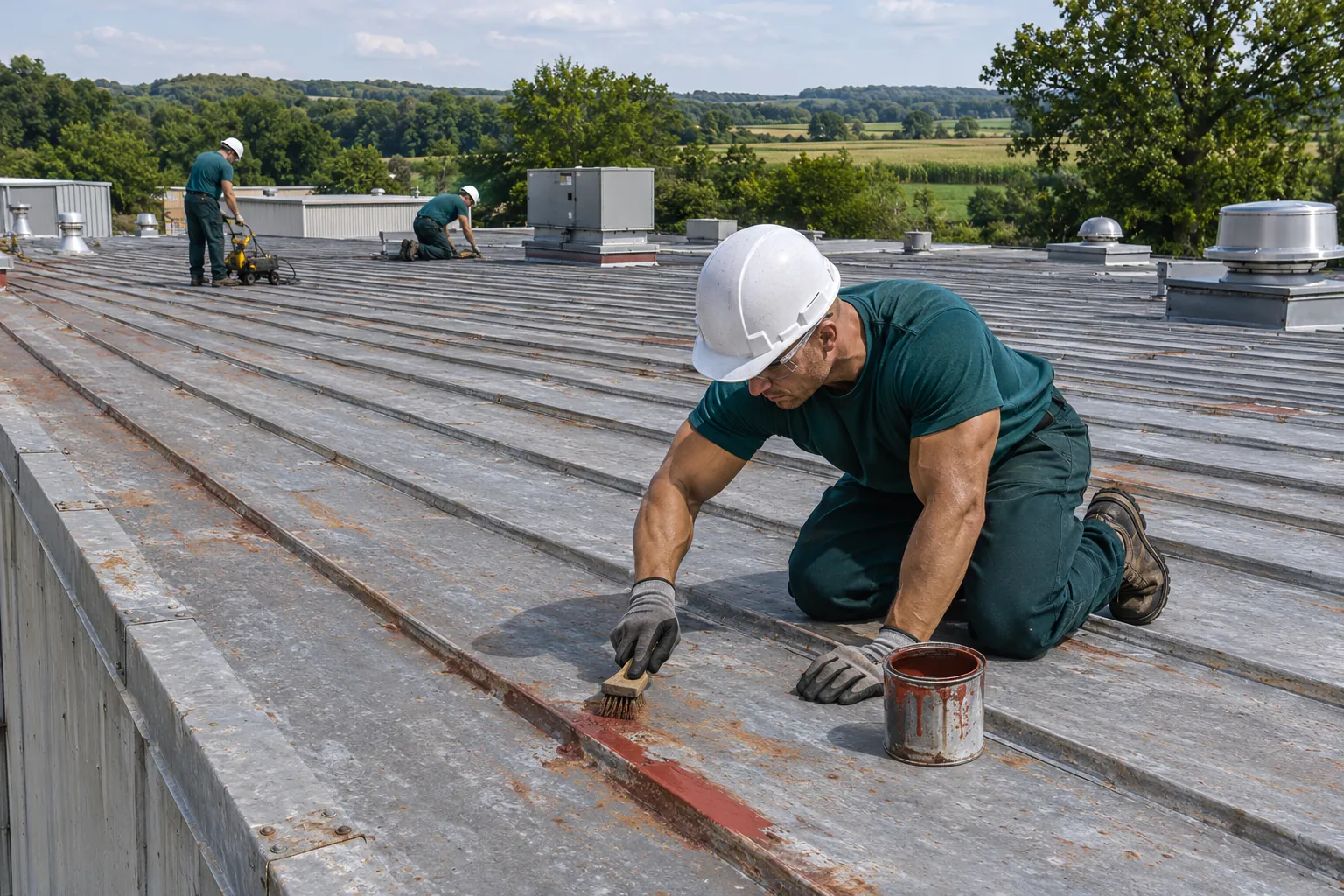
Commercial Metal Roof Coating
Coating alone for panels that need no extra insulation.
Metal Roof Coating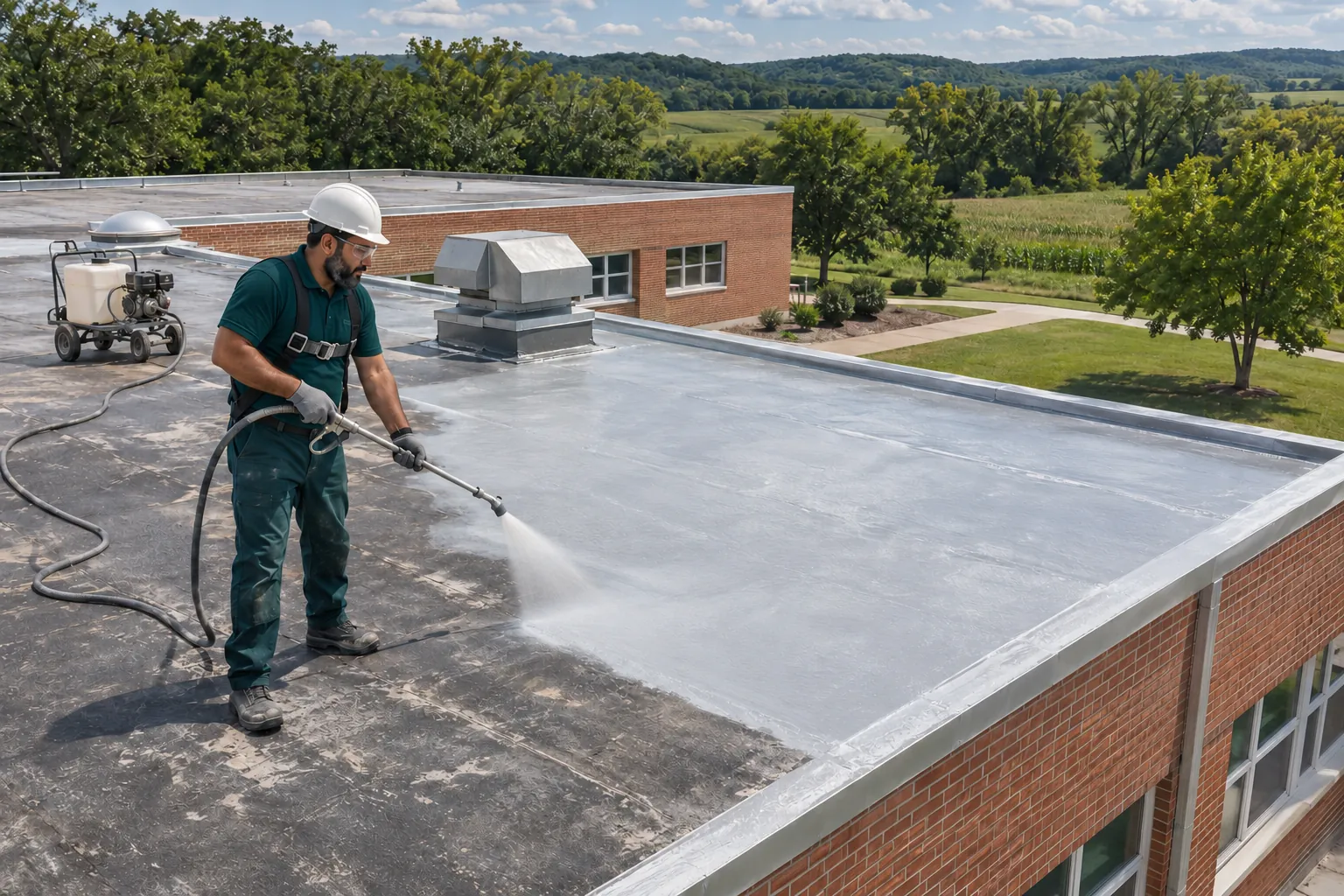
Spray Foam Roofing Questions From Bellevue Owners
What owners ask before choosing foam.
How long does a spray foam roof last in Bellevue?
A foam roof stays in service through several topcoat renewals as long as the foam stays dry and covered. The foam itself wears little because the topcoat takes the sun and weather. Topcoat thickness, quick repair of punctures, and recoating on schedule decide how long it lasts; ignored damage lets water into the foam.
How does spray foam roof recoating work?
We clean the surface, cut out damaged foam, fill those spots with new foam or sealant, and sand them flush. A fresh topcoat then goes on at the specified thickness, usually silicone or acrylic matched to the old coat. Recoating before bare foam shows keeps repairs small.
What are the spray foam roofing pros and cons for a Bellevue building?
On the plus side, foam forms one continuous surface, adds insulation, goes over many existing roofs, and can be shaped to drain. On the minus side, it needs dry, mild weather and skilled sprayers, the topcoat needs regular renewal, and hail or birds can damage the surface.
What drives spray foam roofing cost per square foot?
Roof area, foam thickness, and the topcoat set the price. More foam means more insulation and more material. Removing wet roofing, building up low spots, and flashing curbs and edges add to it. Our planning ranges run about $2.50 to $4.00 per square foot for coating and about $5 to $8 for replacement.
Can spray foam go over a metal roof in Bellevue?
Yes, when the panels are firm and the screws are tight. Foam fills the space between ribs, covers laps and fasteners in one layer, and adds insulation the building likely lacks. Loose screws are tightened and rusted-through spots are patched first, since foam needs a firm surface to bond to.
Hire a Bellevue Spray Foam Roofing Contractor
Tell us about the roof you have now, and we will test it for moisture and plan the foam thickness and topcoat.